
23 Nov 2007
Boyd Pianos
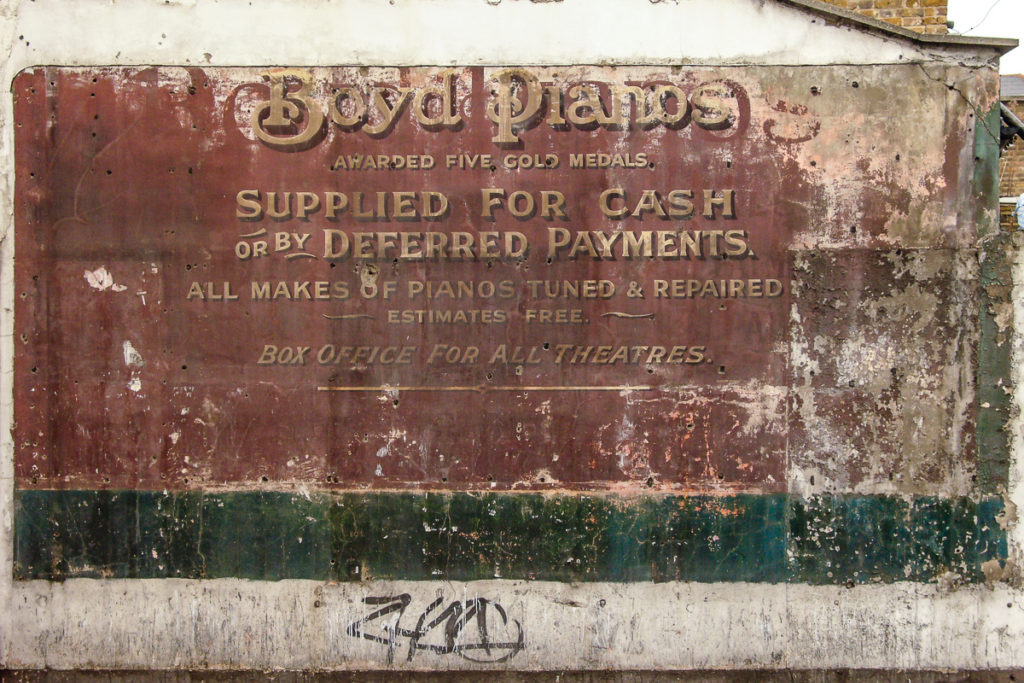
Charlie, sarflondondunc and Ross all told me about this great sign for Boyd Pianos that has recently been revealed on Shacklewell Lane in Hackney, presumably by the removal of a billboard. It is interesting on a number of levels, not least the quality of preservation
1. It is advertising pianos which is something you would never see these days on an outdoor billboard or poster site. This was obviously not unusual back in the day as further evidence from Blooms Pianos shows.
2. In addition to their main piano business Boyd also had a sideline in theatre box office ticket sales. Perhaps this relates in some way to them supplying pianos to theatres and this being a natural bolt on service they could offer to the theatres and the public?
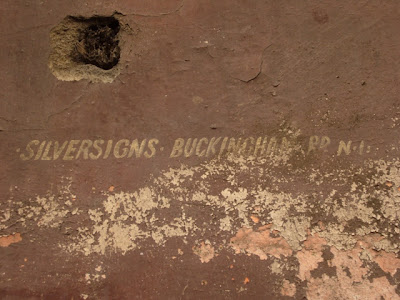
3. The colours used are previously unseen in my experience. Very deep red but, more importantly, the use of gold for the lettering. This must have been very expensive. There may be a clue in the name of the company which did the sign, ‘Silversigns’ of Buckingham Road N1, as can be seen below. It would be interesting to know when metalic paint colours were first developed and by whom.
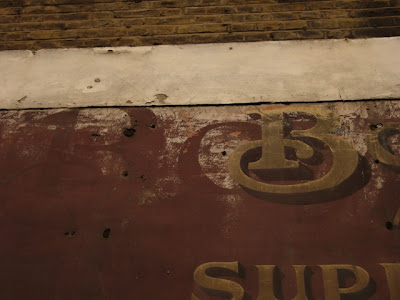
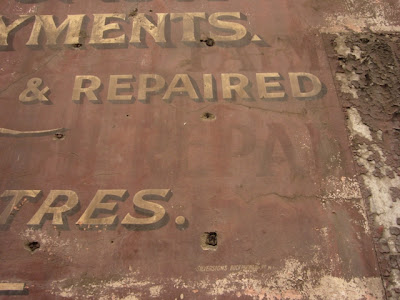
4. There is clear evidence of a previous iteration of this sign underneath creeping through as a palimpsest (see below). It would be interesting to know why they decided to move to a smaller font size, presumably to include more text but much of the palimpsest seems to indicate that the new and old signs were virtually identical.
Related Posts
-

An opportunity to grab a brush or spray can and contribute to the restoration of a Brixton mural
My friends at the London Mural Preservation Society have successfully obtained lottery funding to restore the Brixton Windmill Mural. The fun part is that members of the public can get involved this weekend (19th and 20th), next weekend (26th) and the Tuesday and Thursday (22nd and 24th) in between. Find out more, including additonal work […]
18 May 2012
-
Ghost Signs in Time Out
Two weeks after their feature on disappearing London, Time Out published three of my pictures in their magazine (8-15th November 2006). Thanks to Gabriel who took the scan of the page for me. My three pictures are the three along the bottom, although I also have shoots of the Bovril one in Brixton and the […]
16 Jun 2007
-
Numbers 3-7 Stoke Newington Church Street
On one of my walking tours back in 2014 guests had the opportunity to see this reveal of a newsagent and tobacconists’ sign at No.5 Stoke Newington Church Street. Starlove, as it was known, occupied the premises from at least 1962 until the late 1970s and, prior to that, it had been a newsagent since […]
29 Dec 2017
